Source Automatic Laser Welded LiFePO4 Battery for Solar, EVs, and Tools
Explore 30 listings for automatic laser welded LiFePO4 battery solutions tailored for solar energy storage, electric vehicles, and power tools. Buyers can compare specifications, customization options, and pricing to find the right supplier for their manufacturing needs.
Key considerations
Products List




Brand New Automatic Laser Welding Machine LiFePO4 Battery Ees Hy-Auto
$1000000.00 - $1500000.00
Moq: 1

Automated 3000W Laser Welding Equipment for EV Battery Manufacturing Line
$1000000.00 - $1500000.00
Moq: 1

Customized Automatic Laser Welding Machine Battery Module Pack Production Line
$1000000.00 - $1500000.00
Moq: 1


Comprehensive Sourcing Guide
Strategic Sourcing Guide for Automatic Laser Welded LiFePO4 Battery Systems
The convergence of lithium iron phosphate (LiFePO4) chemistry with automated laser welding technology represents a significant advancement in energy storage manufacturing. For procurement professionals, sourcing these systems requires a nuanced understanding of the intersection between high-precision welding equipment and advanced battery cell specifications. The market offers a diverse array of solutions, ranging from portable manual units to fully automated gantry-based systems designed for high-volume production. This guide synthesizes available product attributes and industry standards to provide a structured approach for evaluating suppliers and defining technical requirements for automatic laser welding of LiFePO4 batteries.
Technical Architecture and Laser Classification
The core of any automated welding solution lies in the laser source and its classification. In the context of LiFePO4 battery pack assembly, the optical fiber laser is the predominant technology observed in current industrial offerings. These systems are categorized as continuous wave lasers, which provide a steady stream of energy essential for deep fusion welding. This welding mode is critical for ensuring the structural integrity of battery tabs and busbars, where consistent heat input prevents cold joints that could lead to thermal runaway or high resistance points.
The distinction between manual and automatic control is a primary differentiator in system architecture. While portable welding machines offer flexibility for prototyping or low-volume repair, the core keyword specifically targets automatic systems. These machines typically feature gantry worktables with multi-axis movement capabilities. Observed specifications indicate worktable dimensions that can be customized based on module drawings, with axis ranges often extending to 1000mm on the X-axis, 800mm on the Y-axis, and 600mm on the Z-axis. This spatial configuration allows for the precise positioning of large-format battery cells, which are frequently available in capacities ranging from 25Ah to 340Ah. The ability to handle cells with nominal voltages of 3.2V and capacities up to 280Ah requires a robust mechanical framework capable of supporting significant weight, with some automated units weighing up to 600kg to ensure stability during high-precision operations.
Integration of Battery Chemistry and Welding Parameters
LiFePO4 batteries present unique material challenges compared to other lithium-ion chemistries. The cathode materials, specifically LiFePO4, require specific thermal management during the welding process to maintain the electrochemical stability of the cell. The welding process must be optimized to achieve deep fusion without compromising the internal structure of the battery. Automatic laser welding machines designed for this application often include integrated cooling systems, such as chillers from manufacturers like Hanli, to manage the thermal load generated during continuous operation.
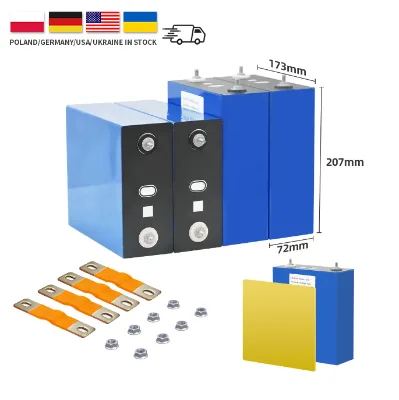
The operational environment for these systems is equally critical. The equipment is designed to function within a temperature range of -30°C to 60°C, ensuring reliability in various industrial settings. However, the physical dimensions of the battery cells themselves, such as those with a size of 72173207mm, must be accounted for in the fixture design. The welding process is not merely about joining metal; it is about creating a hermetic seal or a low-resistance electrical connection that can withstand thousands of charge-discharge cycles. Systems claiming a cycle life of up to 8000 cycles for the battery pack rely heavily on the consistency of the welds produced by the automated laser source. The "High Precision" advantage of these machines is directly correlated to the longevity and safety of the final battery product.
Compliance, Safety Standards, and Certification Verification
When sourcing automatic laser welding equipment for battery manufacturing, verifying compliance with safety and industry standards is paramount. While specific certification documents vary by supplier, buyers must ensure that the laser classification adheres to international safety standards for optical fiber lasers. The equipment must be rated for industrial use in environments where high-energy lasers are present.
Furthermore, the manufacturing location and origin play a role in regulatory compliance. Many automated welding systems originate from manufacturing hubs in China, specifically regions like Guangdong and Luoyang, Henan. Buyers should verify that the equipment meets the electrical safety standards of their target market, such as CE marking for Europe or UL certification for North America. The standard dimensions provided for some units, such as 420.00cm * 220.00cm * 180.00cm, suggest large footprint machinery that requires specific facility planning. It is essential to confirm that the "prod_standard" or physical specifications align with the available floor space and power infrastructure of the buyer's facility. Additionally, the warranty period, often cited as 5 years for battery components, should be scrutinized to ensure it covers both the laser source and the mechanical gantry systems.
Cost Drivers and Economic Considerations
The pricing for automatic laser welding systems is highly variable, influenced by the complexity of the automation, the power density of the laser, and the customization level of the worktable. The observed price range in the market spans from approximately $35.50 to $1,500,000. This vast disparity reflects the difference between small-scale portable units and fully integrated, custom-engineered production lines. The primary cost drivers include the laser source power, the sophistication of the motion control system (X, Y, Z axes), and the integration of auxiliary equipment like chillers and vision systems.
Minimum Order Quantities (MOQ) also significantly impact the total cost of ownership. The observed MOQ range is between 1 and 500 units. For buyers seeking to establish a new production line, an MOQ of 1 allows for the procurement of a single unit for testing and validation, whereas an MOQ of 500 suggests a bulk purchase scenario for large-scale deployment. The "Customized" packing and "OEM/ODM" support capabilities are additional cost factors. Buyers should evaluate whether the supplier offers modular solutions that can be scaled up or down based on production volume requirements. The weight of the equipment, ranging from 5.4kg for portable units to 600kg for automatic gantry systems, also influences shipping and installation costs, which should be factored into the total procurement budget.
Supplier Evaluation and Operational Capabilities
Evaluating a supplier for automatic laser welding systems requires a deep dive into their technical capabilities and customization support. The market features suppliers who offer "OEM/ODM" support, indicating a willingness to tailor the machine to specific battery module designs. Key evaluation criteria should include the supplier's experience with LiFePO4 chemistry and their ability to provide a "Worktable Size" that matches the buyer's specific module drawings.
The "Function" of the machine, specifically "Lithium Battery Pack Laser Welding," should be the primary filter. Suppliers must demonstrate a track record in the "Manufacturing Industry," "Automotive Industry," and "Electronic Industry," as these are the primary application sectors for these systems. The "Brand Name" and "Product Name" are less critical than the technical specifications, such as the "Laser Source" type and the "Chiller" brand. Buyers should request case studies or references from similar industries to verify the machine's performance in real-world scenarios. The "Cycle Life" of the battery pack, often cited as 6000 to 8000 times, is a direct result of the welding quality, making the supplier's process control capabilities a critical factor in the selection process.
Quality Control and Long-Term Procurement Strategy
Implementing a robust quality control (QC) strategy is essential for maintaining the integrity of automated laser welding operations. The "High Precision" attribute of the machine must be validated through regular calibration and testing. Buyers should establish a protocol for monitoring the "Power Density" to ensure it remains consistent with the "Deep Fusion Welding" requirements. The "Operating Temperature" range of the equipment must be monitored to prevent thermal drift that could affect weld quality.
Long-term procurement considerations involve the availability of spare parts and technical support. The "Warranty" period of 5 years is a significant indicator of supplier confidence, but it is crucial to understand the scope of this warranty. Does it cover the laser source, the motion control system, or just the mechanical structure? The "Battery Type," listed as "Liquid" in some contexts, suggests the need for specific handling procedures that the welding system must accommodate. Additionally, the "Selling Units" being "Single item" implies that buyers can start with a single machine, but the scalability of the system should be verified. The "Customized" nature of the packing and the "Worktable Type" (Gantry) should be designed to minimize downtime and maximize throughput.
Comparative Analysis of System Configurations
To facilitate decision-making, buyers should compare different system configurations based on their specific production needs. The following table outlines the key differences between portable and automatic configurations based on observed market data.
| Feature | Portable Manual System | Automatic Gantry System |
|---|---|---|
| Control Type | Manual | Automatic |
| Laser Class | Continuous Wave | Continuous Wave (Optical Fiber) |
| Typical Weight | 5.4 kg | 600 kg |
| Worktable Type | Standard / Custom | Gantry Worktable |
| Axis Range | Limited / Fixed | X: 1000mm, Y: 800mm, Z: 600mm |
| Primary Application | Prototyping, Repair | High-volume Manufacturing |
| Cycle Life Support | Variable | Up to 8000 cycles |
| Chiller Integration | Optional / External | Integrated (e.g., Hanli) |
| Customization | Available | High (Module Drawing based) |
This comparison highlights that while portable systems offer flexibility, automatic gantry systems are necessary for achieving the high precision and consistency required for commercial LiFePO4 battery pack production. The decision ultimately depends on the volume of production, the required cycle life of the battery, and the specific geometric constraints of the battery modules being welded.
Conclusion
Sourcing automatic laser welded LiFePO4 battery systems is a complex process that demands a thorough understanding of laser technology, battery chemistry, and industrial automation. Buyers must navigate a wide range of technical specifications, from laser classification and power density to worktable dimensions and axis ranges. By focusing on the integration of high-precision welding with the specific requirements of LiFePO4 cells, procurement professionals can identify suppliers that offer robust, scalable, and safe solutions. The key to success lies in verifying the technical capabilities of the equipment, ensuring compliance with safety standards, and selecting a supplier that provides the necessary customization and long-term support to meet evolving production demands.
FAQs
What laser classification is used for automatic welding?
The systems use an Optical Fiber Laser classified as a Continuous Wave Laser. This technology provides deep fusion welding essential for joining battery tabs and busbars without creating cold joints that could lead to thermal issues.
Which battery capacity range is supported by these machines?
The equipment supports battery capacities ranging from 25Ah to 340Ah. Specific models can handle nominal capacities of 280Ah with a nominal voltage of 3.2V, ensuring compatibility with large-format LiFePO4 cells.
How is the worktable configured for automatic operation?
Automatic systems utilize a Gantry Worktable with customizable dimensions based on module drawings. Axis ranges typically extend to 1000mm on the X-axis, 800mm on the Y-axis, and 600mm on the Z-axis for precise positioning.
Can suppliers offer customization for the welding process?
Yes, suppliers support OEM and ODM customization for the welding process. The worktable size and packing can be customized, allowing the machine to adapt to specific battery module designs and production requirements.
What is the expected cycle life for the welded battery packs?
Welded battery packs can achieve a cycle life of up to 8000 cycles. Some specifications indicate a cycle life of 6000 times, ensuring long-term reliability and structural integrity for applications like electric vehicles and energy storage.
Where are these automatic welding machines typically manufactured?
These machines are manufactured in China, with origins in Guangdong and Luoyang, Henan. Buyers should verify that the equipment meets the electrical safety standards of their target market before procurement.